

What is an offset
guitar?
Shape, sound
and history
How do you identify an offset guitar, why is its body angled, and what is the difference between a Jazzmaster and Jaguar?
Article · Reading time approx. 5 min · GAS Guitarworks
In this article
In brief
An offset guitar is an electric guitar with an asymmetrical, or offset, body waistline. The body's two inward curves are positioned differently in relation to the neck, giving the guitar its distinctive, slightly angled shape.
The offset design was originally developed to improve the guitar's ergonomics and balance, especially when playing seated. Later, offset guitars became an important part of surf, indie and alternative rock history.
But how do you actually identify an offset guitar, and what sets it apart from a regular electric guitar?
How do you identify an offset guitar
?
An offset guitar is identified primarily by its body waistline. On a traditionally, more symmetrically shaped electric guitar, the body's inward curves are roughly at the same height. On an offset guitar, one is closer to the neck and the other closer to the bridge. This creates the asymmetrical shape characteristic of an offset body.
However, it is worth remembering that not every asymmetrical guitar is an offset. For example, the Fender Stratocaster has body horns of different lengths, but its waistline is not offset in the same way.
Offset refers specifically to the body design – not to a particular guitar model, pickup type or bridge configuration.
The history of offset guitars
From Jazzmaster to alternative rock
The history of offset guitars dates back to the late 1950s. In 1958, Fender introduced the Jazzmaster, whose asymmetrical body was designed especially for jazz musicians who played seated. However, the Jazzmaster did not become particularly popular with its original target group. Instead, the model quickly found its way into surf music.
In 1962, Fender introduced the Jaguar, which continued the offset design tradition but differed from the Jazzmaster in, among other things, its shorter scale length and electronics. In the following decades, offset guitars became popular among punk, indie and alternative rock players.
1958
Jazzmaster
Fender introduces an asymmetrical body for seated jazz players.
1960s
Surf and Jaguar
The Jazzmaster finds its home in surf music. The Jaguar is introduced in 1962.
1980s–90s
Indie and alt
Punk, indie and alternative rock players bring offsets to new popularity.
Today
Custom shops
Offsets are made by large factories and small custom shops in their own interpretations.
Jazzmaster vs. Jaguar in brief
| Model | Jazzmaster | Jaguar |
| Year introduced | 1958 | 1962 |
| Scale length | 25,5″ | 24″ |
| Frets | 21 | 22 |
| Pickups | Wide, shallow single-coils | Narrower single-coils with metal surrounds |
| Bridge | Floating bridge and vibrato | Floating bridge and vibrato |
Today, offset guitars are made by numerous instrument manufacturers, from large factories to small custom shops. The classic shape has endured, but a vast number of different interpretations have emerged around it.
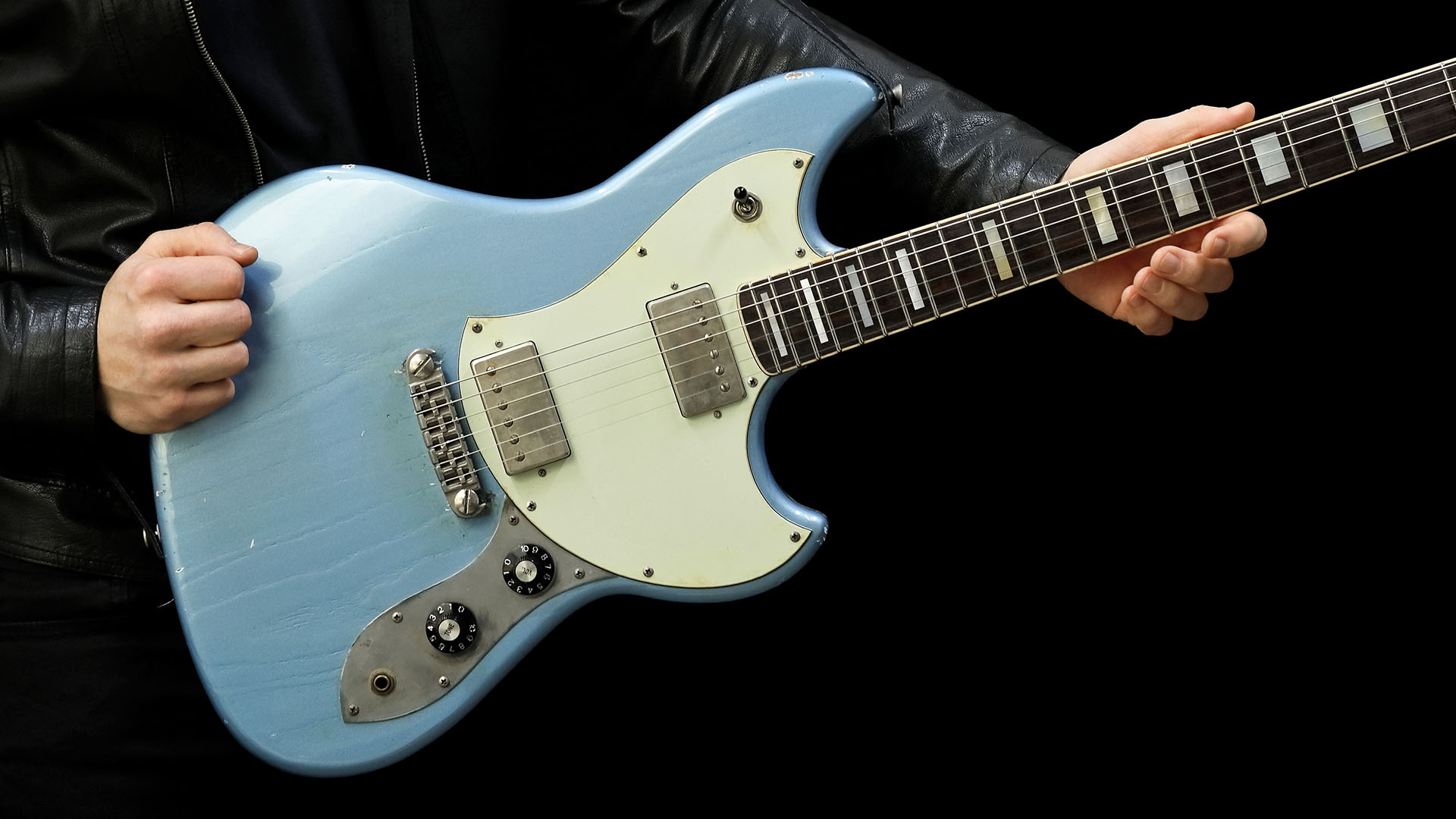
Why was the offset body
designed?
The asymmetrical shape of an offset guitar was not created for looks alone. By shifting the body’s waistline, the guitar can rest on a seated player’s thigh at a more natural angle. This can improve playing posture and reduce the need to support the instrument with your hands.
The balance between the body and neck also matters. A well-designed instrument stays comfortably in playing position whether sitting or standing. However, an offset shape does not automatically mean a lightweight or ergonomically perfect guitar. The body weight, neck construction and overall balance of the instrument also affect the result.
What does an offset guitar
sound like?
Offset guitars are often associated with a bright, open and distinctive sound. This impression comes especially from classic Jazzmaster and Jaguar models, whose pickups, electronics and bridge designs have contributed to their recognizable tone.
The shape of an offset body alone does not define a guitar’s sound.
An electric guitar’s amplified sound is significantly affected by its pickups, electronics, strings and amplifier. An offset guitar can be fitted with traditional single-coil pickups, P90 pickups or more powerful humbuckers. The same body works equally well in a vintage-inspired surf guitar and in a modern instrument built for heavier music.
Does an offset guitar always have
a floating bridge?
Classic Jazzmaster and Jaguar models are known for their floating vibrato bridges, where the strings continue to a vibrato mechanism located behind the bridge, but the bridge can also be fixed. A floating bridge is an important part of the character of traditional offset guitars, but it may require more attention when setting up. In some configurations, a shallow string break angle can easily cause extra buzzing or strings slipping out of the bridge saddles.
With the right setup and suitable components, many of these issues can be resolved. A modern offset guitar can also use a fixed hardtail bridge, a Tune-O-Matic solution or other bridge types. An offset guitar therefore does not require a floating bridge or vibrato arm.
If your instrument has string buzz, tuning issues or other malfunctions, the cause should always be investigated. GAS Guitarworks' guitar service in Tampere also helps with the setup and repair of traditional offset guitars.
BUZZING or tuning issues?
We also set up and repair traditional offset guitars.
Who is an offset guitar
suitable for?
An offset guitar can be a good choice for almost any electric guitarist. Its ergonomic body shape can feel especially comfortable when playing seated, but it works just as well for gigs. Classic offset models are popular in surf, indie, punk, and alternative–music.
However, the body shape does not limit the music style. When the pickups, bridge, neck and other details are chosen according to the intended use, an offset guitar can be built into a highly versatile instrument.
The most important thing is the same as with any guitar: how the instrument feels in your own hands.
GAS Guitarworks
offset guitar: Viva La Prima
You do not need to look only to international instrument manufacturers for an offset guitar. GAS Guitarworks handcrafts the Viva La Prima offset guitar in Härmälä, Tampere, combining the ergonomics of a classic body with modern guitar building.
Viva La Prima is not a copy of a Jazzmaster or Jaguar, but GAS Guitarworks’ own interpretation of an offset guitar. Explore the Viva La Prima offset guitar and its individual options, or view the GAS Guitarworks online store for instruments currently available.
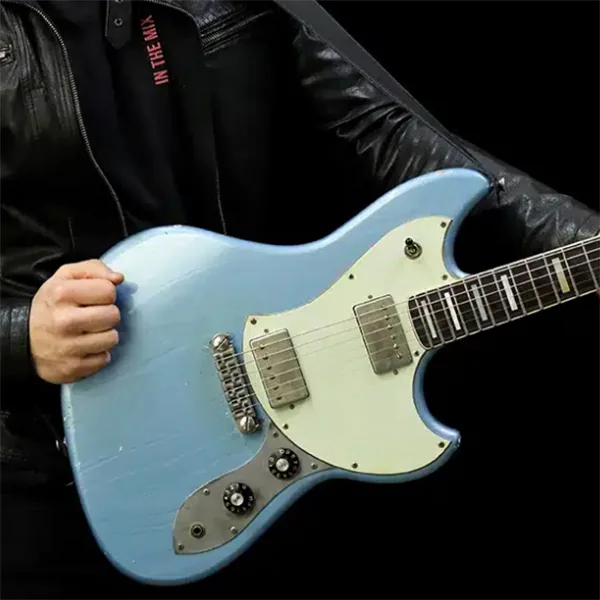
HANDMADE OFFSET GUITAR FROM HÄRMÄLÄ
Viva La Prima
2,8–3,2 kg · from 3 500 €
Each Viva is handmade, and its woods, neck, pickups and bridge can be selected according to the player’s own preferences.
FAQ
Frequently asked questions
about offset guitars
Is a Jazzmaster the same thing as an offset guitar?
No. The Fender Jazzmaster is one of the best-known offset guitars, but offset refers to the body shape rather than a specific guitar model. An offset guitar can differ from a Jazzmaster in its construction, pickups and bridge.
Is the Fender Stratocaster an offset guitar?
No. The Stratocaster's horns are asymmetrical, but its body waist is not offset in the way characteristic of an offset guitar. Asymmetrical looks alone do not make a guitar an offset.
What is the difference between a Jazzmaster and a Jaguar?
Both are classic Fender offset guitars, but their construction differs. The Jazzmaster has a 25.5-inch scale, while the Jaguar has a 24-inch scale. The models also have different pickups and electronics, which affect both tone and playing feel.
Is an offset guitar suitable for a beginner?
Yes. An offset guitar's body shape does not make it any harder to play than other electric guitars. For a beginner, the most important things are a suitable neck profile, a comfortable weight, and a well-set-up instrument. A traditional floating vibrato may require a little more familiarization than a fixed bridge.
